Why We Only Tested Voice-First Platforms
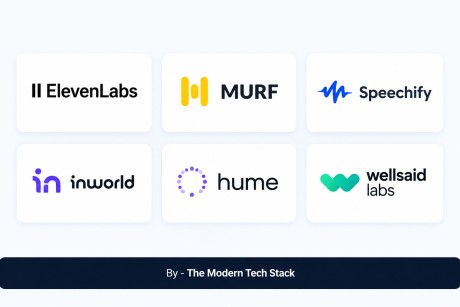
A lot of tools now offer AI voiceover as a feature — HeyGen, Synthesia, Descript, CapCut, and a dozen others. We excluded them deliberately.
Here’s why: voice is not their core product. In head-to-head tests, video-native platforms with a TTS feature consistently lagged behind dedicated voice platforms on naturalness and emotional range, voice cloning accuracy, control over tone and pacing, and voice library depth.
If your primary output is video and voice is secondary, those tools are fine. But if voice quality actually matters to your brand — for podcasts, narrated content, video ads, or voice agents — you want a platform built around voice from the ground up. That’s the filter we used.
Who This Guide Is For
Quick Picks
Tool | Best For | Starting Price | Free Tier? |
|---|---|---|---|
ElevenLabs | Creators, brand content, cloning | $5/month | Yes |
Murf | Script-based workflows, training | $19/month | Yes |
WellSaid Labs | Compliance-heavy enterprises, L&D | Custom | No |
Speechify | Podcasters, accessibility workflows | ~$11.58/mo (annual) | Yes |
Inworld | Developers, voice agents, real-time TTS | Usage-based | Limited |
Hume | Emotional voice design, experimentation | Per-minute | Yes |
How We Tested
Test 1 — Same Script, Three Intents
We fed the exact same script to all six tools, evaluating each for three content contexts:- Podcast/Conversational — warm, natural, feels like a human talking to you
- Educational/Tutorial — clear, measured, authoritative but not stiff
- Energetic Social — punchy, high-energy, built for 30-second content
Test 2 — Voice Cloning
Same voice sample across all tools that support cloning. Graded on resemblance accuracy, tonal consistency, and how much editing the output needed to be usable.The Tools
1. Elevenlabs
Best for: Content creators, brand teams, voice cloning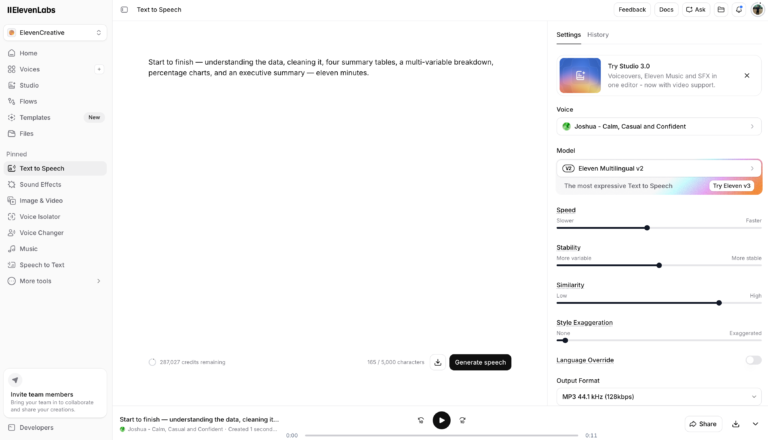
The de facto standard for a reason. Consistently the most human-sounding output in our tests — across all three intents, without needing manual adjustments. ElevenLabs set the benchmark everything else was measured against.
- Nailed all three intent tests out of the box — warm podcast, clear tutorial, punchy social
- Best voice cloning in the group by a clear margin. Resemblance held even on longer scripts
- Credit-based pricing lets you explore the full feature set even on Starter ($5/mo)
- Non-technical users can go from script to export in under 10 minutes
- Voice controls vary by model — what works on one voice may need adjustment on another
- Broadcast advertising licensing requires higher tiers — verify before publishing at scale
Pricing
| Plan | Price | Characters/Month |
|---|---|---|
| Free | $0 | 10,000 |
| Starter | $5/mo | 30,000 |
| Creator | $22/mo | 100,000 |
| Pro | $99/mo | 500,000 |
2. Murf
Best for: Teams who live in scripts, L&D, internal training content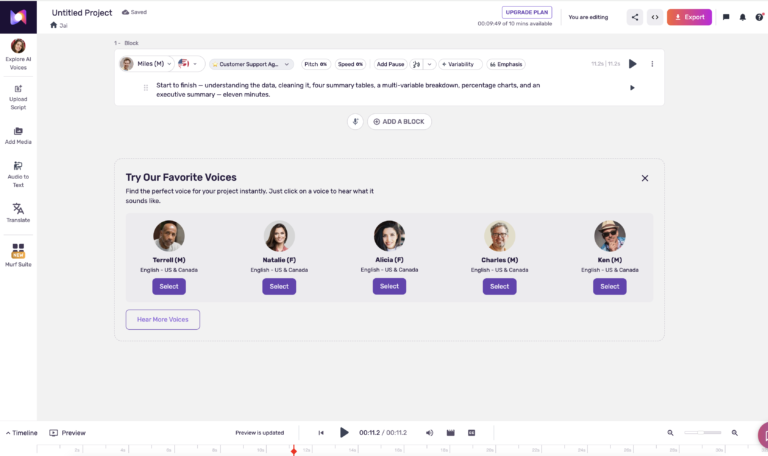
Where ElevenLabs feels like a voice engine, Murf feels like a production studio. Built for teams that care about the workflow as much as the voice. Paste your script, mark speaker changes, set pacing per sentence — it’s the most structured environment of any tool we tested.
- Script-first interface is genuinely useful — built for how production teams actually work
- Pitch and speed controls are free (rare for this category)
- Consistent re-recordings: same voice, same preset, months apart
- Expressiveness fell behind ElevenLabs on every intent test
- “Energetic social” sounded fast, not energetic — meaningful difference for brand content
- Emphasis and variability controls are behind the paywall
Pricing
| Plan | Price | Notes |
|---|---|---|
| Free | $0 | 10 min, no downloads |
| Creator | $19/mo | Commercial rights |
| Business | $39/mo | Team collaboration |
| Business Plus | $199/mo | Advanced controls |
3. WellSaid Labs
Best for: Regulated industries, compliance-heavy orgs, L&D teams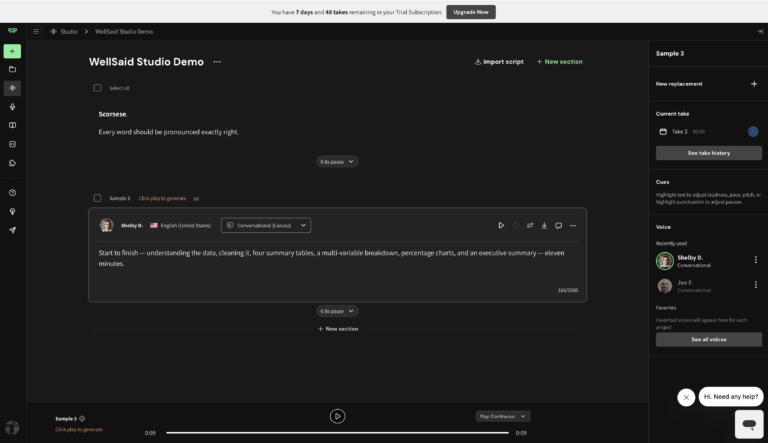
First thing WellSaid does when you sign up: asks a batch of compliance questions. That’s not a bug — that’s the product. WellSaid is the only tool on this list that treats compliance as a first-order product concern, not an afterthought.
- SOC/SOX compliance, content moderation, audit-ready workflows — the real deal
- Clean, professional output for educational and corporate training content
- Team collaboration and review workflows built for enterprise scale
- Emotional range is limited — “Happy” sounded like the same voice played faster
- No free tier. No public pricing. You’re scheduling a demo call before you hear anything
- Not built for creators. Doesn’t try to be
4. Speechify
Best for: Podcasters converting text to audio, accessibility workflows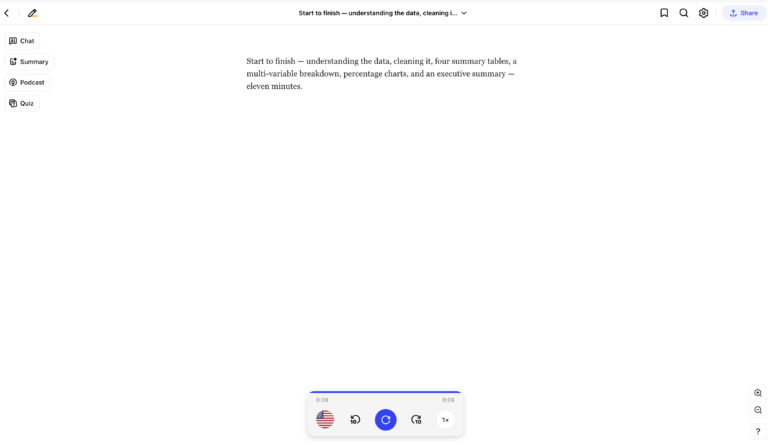
Speechify started as a document reader for people with dyslexia. That origin shapes everything about how it works — and who it works best for. It’s in its own lane: accessibility, personal productivity, and text-to-podcast workflows.
- Only platform on this list with celebrity voices — a genuine differentiator
- Strong accessibility design: adjustable speed, mobile-first, screen reader compatible
- Positioned well for podcasters converting written content to audio
- UX is the biggest problem — no intent-based filters, no fast preview system
- Production quality and control features sit below ElevenLabs and Murf at comparable prices
- Annual billing only for most plans — you’re committing before proper evaluation
Pricing
| Plan | Effective Monthly (Annual) |
|---|---|
| Starter | ~$11.58/mo |
| Premium | ~$20.75/mo |
| Premium+ (commercial cloning) | $249/yr |
5. Inworld
Best for: Developers building voice agents, real-time TTS, streaming audio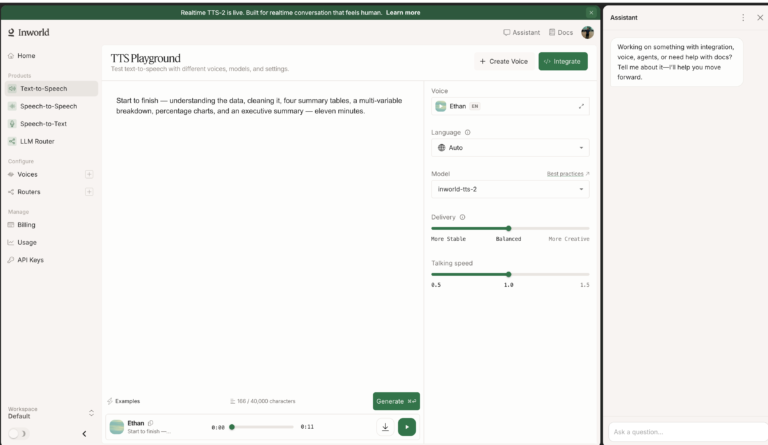
Inworld isn’t a voiceover studio. It’s developer-grade TTS infrastructure built for real-time, programmatic, and conversational use cases. A different category entirely — and the best option in that category by a significant margin.
- Steering: most granular voice control we’ve seen — articulation, intonation, pause placement, prosody
- Streaming TTS is first-class — generates voice in real time as your system produces text
- API is well-documented with clear examples
- ~$5–10/million characters vs ElevenLabs at ~20x that rate
- Voice library filters are technical, not intent-based — hard for non-developers to navigate
- Not built for content creators. If you need a YouTube voiceover, look elsewhere
6. Hume
Best for: Brand teams invested in voice design, UX experimentation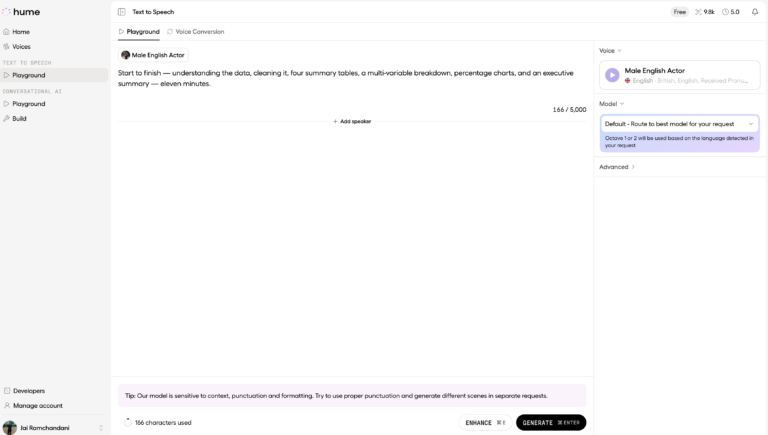
Hume doesn’t give you a voice library. It gives you a voice design process. The concept is compelling — intent-based filters like “TikTok influencer” or “corporate narrator” instead of technical settings. The execution is still maturing, but the ceiling is genuinely high if you invest the time.
- Best UI of any tool we tested — genuinely pleasant to use, helpful tips during generation
- Intent-based voice filters are a smart UX choice for non-technical users
- Full prompt-based voice design process genuinely improves output quality
- Raw out-of-the-box output is below ElevenLabs and Murf — the ceiling is high but requires work
- No ready-made library of pre-designed voice profiles — new users have to discover quality slowly
- Not production-ready as a primary tool for teams on deadlines
Full Comparison Table
Tool | Voice Quality | Cloning | Controls | UX | API/Dev | Real-Time | Price |
|---|---|---|---|---|---|---|---|
ElevenLabs | ★★★★★ | ★★★★★ | ★★★★ | ★★★★ | ✓ | Limited | $5/mo |
Murf | ★★★ | ★★★ | ★★★ | ★★★★ | Limited | ✗ | $19/mo |
WellSaid | ★★★★ | Ent. only | ★★★ | ★★★ | Limited | ✗ | Custom |
Speechify | ★★★ | ★★★ | ★★ | ★★ | Limited | ✗ | ~$12/mo |
Inworld | ★★★★ | ✗ | ★★★★★ | ★★ | ✓✓ | ✓✓ | Usage |
Hume | ★★★ | ✗ | ★★★★ | ★★★★ | ✓ | ✓ | Per-min |
Which Tool is Right for You?
- Creating brand videos, social content, or podcasts?
- ElevenLabs. Best quality, easiest workflow, most exploration-friendly pricing.
- Internal training, e-learning, or L&D content?
- Murf for most teams. WellSaid if you’re in a regulated industry.
- Building a voice agent or real-time voice feature?
- Inworld. Nothing else here is built for that.
- Tight budget, need to test quickly?
- ElevenLabs free tier (10,000 characters) or Murf free tier (10 min). ElevenLabs Starter at $5/mo is the best value entry point in the market.
- Emotional expressiveness is a real priority?
- Hume — with the expectation that it takes time to unlock.
How to find your Brand Voice Over?
This section is worth slowing down for. Most teams skip it, then wonder why their content doesn’t sound consistent six months in.
- Pick 2–3 voices and run the same script through each
- Don’t browse the library and guess from a preview clip. Take a real script — something you’d actually publish — and generate it in 2–3 different voices. Put them side by side. The difference in how they feel is immediate and decisive.
- Match the voice to your brand identity
- Ask: what does your brand feel like? Energetic and punchy (media company, DTC brand, social-first creator). Clear and educational (healthcare training, e-learning, professional services). Calm and conversational (long-form podcasting). Authoritative and clean (corporate training, internal communications).
- Let people around you hear it
- Before you commit, play the shortlist to 3–5 people who know your brand — team members, a founder, a few customers if you can. Ask: does this sound like us? The answer is usually quick and instinctive.
- Run it across 3–4 real scripts before locking in
- One script isn’t enough. A voice that sounds great on a 30-second hook might lose its energy across a 3-minute tutorial. Test it on the range of formats you actually produce.
- Lock it down and don’t drift
- Once you’ve chosen a voice, treat it like a brand asset. Same voice, same preset settings, across every piece of content. Stick to one voice — two at most. That consistency is what builds recognition over time.
On Voice Cloning
If you already have an established brand voice — a founder, spokesperson, or character people associate with your brand — voice cloning is worth serious consideration. It gives you unlimited scalable output in that voice, consistency that no library voice can replicate, and a genuine brand differentiator.
ElevenLabs is the strongest option for cloning quality right now. You’ll need a clean audio sample — ideally 30+ minutes of speech in a controlled environment — to reach Professional Voice Clone quality.
Frequently Asked Questions
GENERALFinal Verdict
After testing all six tools, three clear winners emerged for three distinct use cases: