AI MARKET INTELLIGENCE

State of AI Sales Tools in 2026 : An Executive Summary

Executive takeaway

AI-powered sales workflows are likely to continue evolving as generative AI expands into new use cases and becomes more capable within existing ones. For sales organizations, it is therefore prudent to experiment with emerging workflows while evaluating investments over an approximately 18-month horizon. Annual technology and administrative budgets should account for ongoing workflow upgrades as AI changes how existing processes are executed. The focus should be on measurable improvements in productivity, conversion and pipeline quality, rather than automation for its own sake.

Prospecting

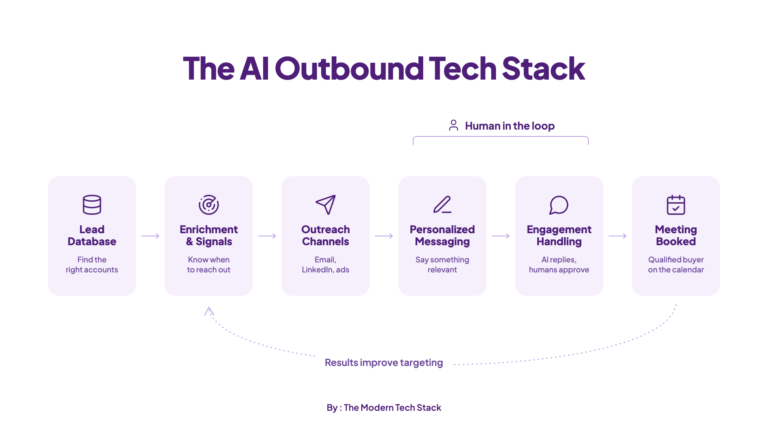
Prospecting is increasingly combining AI-powered inbound demand generation with automated outbound. On the inbound side, teams can use their ICP to identify lookalike audiences and automatically target them through paid media, while AI helps enrich and prioritize the accounts generated. Clay, for example, combines data from more than 100 providers for account research and enrichment; Anthropic reported that this approach tripled its enrichment coverage compared with its previous single-provider setup. UserGems takes a different approach, identifying when former champions or buyers move companies; Outreach reported that tracking more than 5,000 such moves generated 101 opportunities and $1.2M in new pipeline.Outbound is also moving from manually constructed lists and sequences toward signal-driven automation. Platforms such as Amplemarket and Regie.ai combine prospect data, buying signals and multichannel outreach across email and LinkedIn. icCube reported a 6.3x increase in reply rates and 50% more meetings with Amplemarket, while a B2B SaaS customer using Regie.ai reported 21% more outbound meetings per SDR.The emerging model is a continuously refreshed prospecting workflow in which AI identifies the accounts or individuals worth engaging, determines the relevant signal and initiates the appropriate inbound or outbound motion.

Nurturing

Once prospects show interest, AI is increasingly handling the early conversation across email, LinkedIn and the website. Email and LinkedIn agents can respond to inbound replies, answer routine questions, qualify prospects and continue conversations without requiring an SDR to handle every interaction. On the website, AI agents can identify visitors, use account context, answer questions and guide buyers toward relevant content or a sales conversation.Qualified’s Piper illustrates the website model: Greenhouse reported that Piper initiated 15,000 conversations and booked 2,000 meetings in its first year, influencing $27M in pipeline. Breakout similarly adapts website content and conversations based on the visitor. Voice is also becoming part of this workflow, with 11x enabling agents to handle inbound sales calls.The direction is toward a more continuous buyer journey: the same signals that identify a prospect can inform the conversation, content and next action, regardless of whether the buyer arrived through an outbound message, advertisement or organic website visit.

Converting

Conversion workflows increasingly extend from meeting booking through the sales call and pipeline management. Agents can qualify prospects and schedule meetings directly; tools such as Chili Piper automate routing and booking, while Qualified and 11x can conduct or support conversations before a human seller becomes involved.During calls, AI is becoming an operating layer for the seller. Tools such as Avoma capture transcripts, summarize discussions, identify follow-up actions and update CRM records. More broadly, conversation intelligence systems can flag objections, missing information and potential deal risks. Directus, for example, reported reducing follow-up preparation from 45 minutes to five minutes using Avoma.At the pipeline level, deal-intelligence and revenue-forecasting platforms increasingly analyze CRM activity, conversations and deal signals to identify pipeline risk and improve revenue visibility. The emerging model is therefore not simply an AI-assisted sales call, but a connected workflow from prospect identification through conversation, CRM updates and revenue forecasting.

From AI-Assisted to AI-Driven Sales Workflows

Workflow

Today (2026)

Moving Toward (2027-)

Example Tools

Prospecting

Inbound: ICP-based targeting and AI-assisted enrichment. Outbound: Signal-based email/LinkedIn automation.

AI continuously identifies high-potential accounts and autonomously selects the channel, timing and message.

Clay, UserGems, Amplemarket, Regie.ai

Nurturing

Inbound: Website chat and qualification. Outbound: AI handles replies and follow-ups.

Persistent AI conversations across email, LinkedIn and website, with account context carried across channels.

Qualified, Breakout, Warmly, 11x

Converting

AI books meetings, assists calls, creates notes and updates CRM. Deal tools identify pipeline risks.

AI coordinates meeting preparation, calls, follow-up and deal intelligence, with humans focused on complex decisions and relationships.

Chili Piper, Avoma, Gong, Clari

Similar Posts